Cell: –The structural and functional units of organism like plants and animals is called cell.
![]()
![]()
![]()
![]()
![]()
Tissue – A group of cells that works a specific task is called a tissue.
Organ – A group of tissues that works together to perform the same function is called a organ. Ex- Eye, Heart, Lungs etc.
Organ System: – A group of organs that works together to perform a major life function is called organ system.
Ex- Digestive system– mouth, teeth, tongue, stomach, intestine, rectum
Respiratory system– Nose, Tracey (windpipe), lungs
Circulatory system– Heart, blood vessels
Excretory system– Kidneys, Skin and lungs
Organism: –A group of organ system together is called organism. Ex- Human, Cow
The Skeletal system: –The framework of bones that gives definite shape and support to our body is called skeleton system.
The skeletal system is made up of 206 bones and includes all of the bones and joints in the body.
![]()
Functions of skeleton: –
They provide proper shape to the body and support the body.
It protects the delicate internal organs like brain (by skull), lungs, heart(by cartilage).
It allows movement of different part of body.
Bone contains soft bone marrow which makes blood cells.
Bone store essential body minerals like calcium, phosphorus and magnesium.
Bone: –
Bones are strong but light in weight as they are hollow from inside.
The long bones of the arms and legs, such as the femur (thigh bone), have a central cavity containing bone marrow.
Usually, child is born with 300 soft bones. With the growth of child, these bones fuse together and an adult person has 206 bones.
Bone marrow: – The soft spongy substance by which long hollow bone of skeleton is filled is called bone marrow.
Bone marrow is the flexible tissue in the interior of bones. In humans, red blood cells are produced by bone marrow.
![]()
Skull: – The skull is very hard and contains 29 bones. All bones of skull are fixed except the lower jaw bone.
Work-
Lower jaw is movable and helps us to talk, chew and eat our food.
Skull protects the brain.
|
Rib Cage
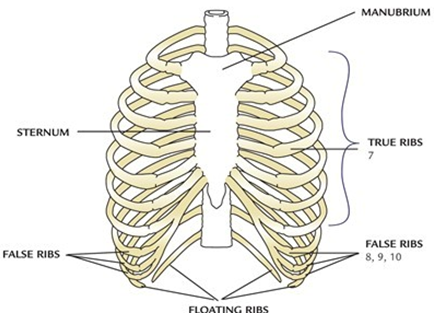
The chest region is supported by a cone shaped bony case is called ribcage.
It is formed of 12 pairs of ribs and a median dagger like sternum.
It protects the heart and lungs.
In frog ribs are absent.
The ribs are long, curved, rod like bones attached to the chest and belly vertebrae of the backbone.
Ribs are 12 pair and 3 types.
True ribs: -Seven pair (1st to 7th ribs) and are directly attach to sternum.
|
|
|
False ribs: – two pairs (8th to 10th) which attach to sternum through seventh ribs.
Floating ribs: – two pairs (11th to 12th) has no attachment with sternum which are ventrally tree.
|
Sternum (chest bone/breast bone): – Single and Duggar shaped which differentiated into three parts.
|
Limbs- In human body there are two pairs of limbs.
1. Fore limbs (arms)
2. Hind limbs (legs)
Fore limbs:– The bones of shoulder or pectoral girdle are attached to our backbone with the help of shoulder girdle.
The bone in the upper arm is called humerus.
The fore limb between the elbow and the wrist is called forearm.
Forearm (lower arm) has two bones called radius and ulna.
The lower part of humerus joins the radius and ulna at the elbow.
|
![]()
|
|
Hind limbs(leg):
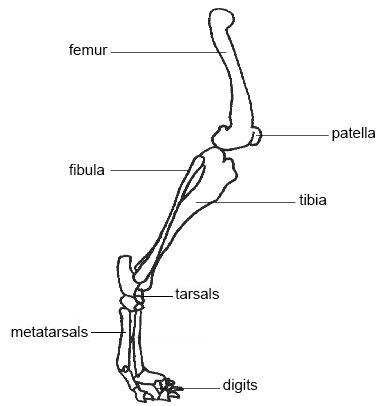
The leg has two parts the thigh and the calf.
The thigh has a long powerful bone is called femur.
The femur is the largest bone in the body.
The calf has two bones called the tibia and fibula.
|
|
Joints: –The junction where two or more bones meet is called joint.
The ends of our bones are covered with a thin layer is called cartilage.
![]()
Notes- Cartilage is found within all movable joints which make movements easier.
![]()
Ball and Socket joint: – This type of joint allows movement in all direction and found in Ex-hip and shoulders.
Hinge joint: – This type of joint allows movement only in one direction like a hinge of a door. Joints in elbows, knees, fingers and toes have hinge joints.
Pivot joint: – This type of joint allows side to side movement. Pivot joint is found between our head and neck.
Gliding Joint: – Gliding joints allow the bones to glide past one another in any direction along the plane of the joint – up and down, left and right, and diagonally. This type of joint is found in wrist and ankle.
Ligament: – The bones are held together by strong tissues is called ligament.
|
Muscles: – The tissue that covers the bone is called muscles.
Muscles are soft, fleshy but strong tissues.
The muscular system is responsible for the movement of the human body.
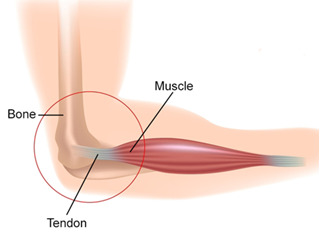
Muscles are attached to the bones with special tough are called tendons.
Tendons are strong elastic fibres.
There are about 650 muscles are in our body.
|
|
![]()
How do muscles work?
The muscles contract and relax to make the bones move.
Always two muscles work together to bring about movements.
When the arm is bent one muscle contracts and get shorter, while the other stretches and becomes longer.
When arm is stretched the reverse the happen.